TheAppHunter is an independent mobile app comparison platform. We may earn a commission when you click through.
Home Workout vs komoot: Which Fitness App Fits Your Routine?
Home Workout has 4.8 stars from 6,000 ratings, while komoot maps outdoor adventures. Compare workouts, planning, platforms, and value.
Home Workout and komoot solve different fitness problems. One gets you moving indoors with no equipment; the other turns hiking, cycling, and running into planned outdoor adventures. The right pick depends less on motivation and more on where you actually exercise.
Home Workout has a visible 4.8 rating from about 6,000 App Store ratings. komoot gives new users one free region, then moves toward paid map access. That difference matters: one is a guided exercise tool, the other is an outdoor navigation platform.
Best for guided indoor workouts: Home Workout - No Equipments
Best for outdoor route planning: komoot - hike, bike & run
Best for gamified motivation: Rise New Hero: RPG Fitness
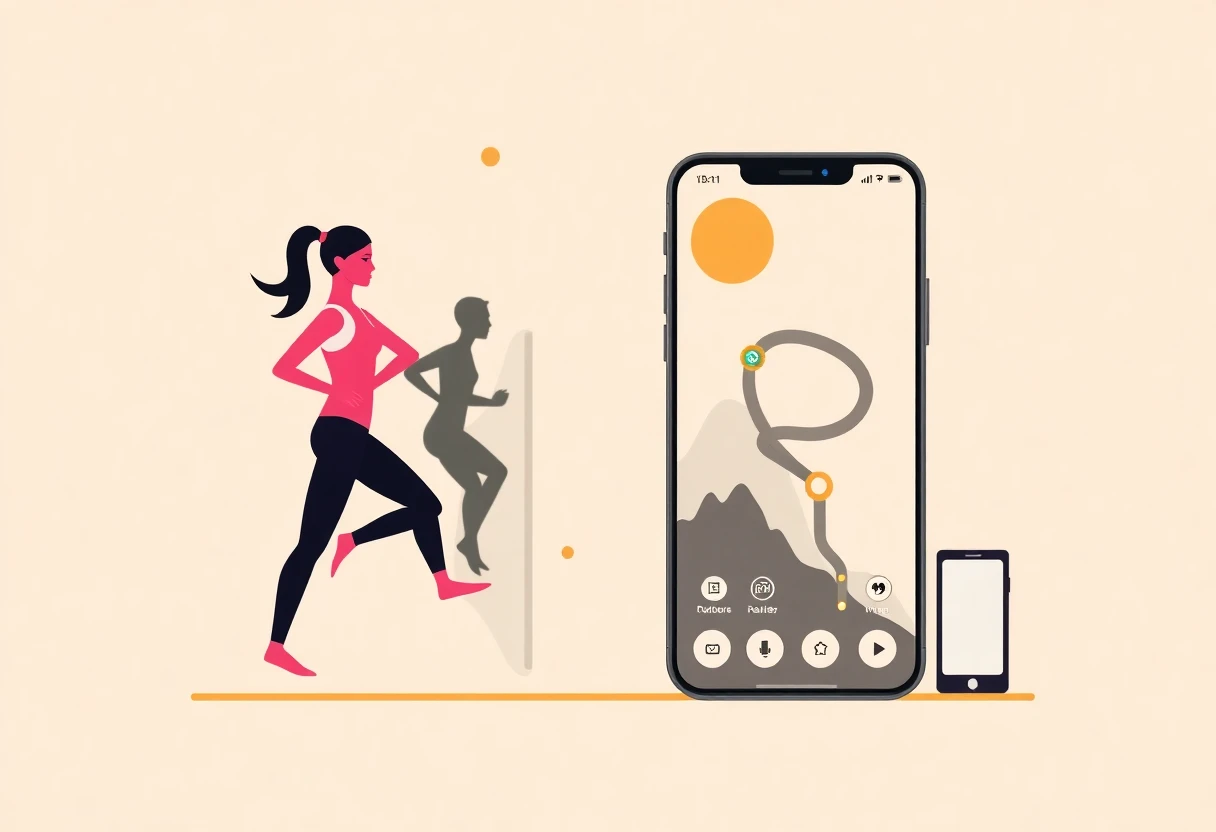
Indoor Training: Home Workout Leads on Simplicity
The strongest evidence in this comparison belongs to Home Workout: the App Store listing shows 4.8 stars across roughly 6,000 ratings, plus a No. 5 position in Health & Fitness. That is a much deeper public rating pool than the two-rating sleep app elsewhere in this group, and it gives the score more weight.
The app is free to download, with in-app purchases, and is available on iPhone and iPad. Its core promise is clear from the title: exercise without equipment. You do not need a gym membership, route data, or a large block of free time before starting. That makes it the cleanest pick for apartment workouts, travel, or anyone rebuilding a routine from zero.
The limitation is just as obvious. The supplied listing does not show the exact workout library, subscription price, app size, or permissions, so the free tier cannot be judged in detail from the available data. Paid features may also be necessary for the full coaching experience. Still, compared with komoot, Home Workout asks less of you before the first session: no route planning and no outdoor conditions to manage.
Best for: iPhone or iPad users who want equipment-free sessions, a highly rated starting point, and a routine that works indoors.
- ✅ 4.8 stars from about 6,000 ratings
- ✅ Free download with no equipment required
- ✅ Available for iPhone and iPad
- ❌ In-app purchases are present
- ❌ The listing does not specify the paid tier or app size
Home Workout
A 4.8 rating from roughly 6,000 App Store users gives Home Workout the strongest public proof in this comparison. It is the easier starting point than komoot because the workout happens wherever you are, but the in-app purchase model means the free download may not include every coaching feature.

That rating advantage is persuasive, but it does not make Home Workout the universal winner. It tracks indoor exercise; it does not help you discover a safe cycling loop or plan a hike. Outdoor training needs a different kind of tool.
Outdoor Fitness: komoot Turns Exercise Into a Route
komoot is the more ambitious app for people who measure a workout in kilometres, elevation, or time outside. Its description covers hiking, road cycling, mountain biking, and running, with route planning built around the sport and terrain. It also uses community recommendations, which can be more useful than a generic workout catalogue when you are visiting an unfamiliar area.
The first region is free, according to the Google Play listing. That is a sensible trial rather than a completely open-ended free plan: you can test the planning concept, but broader map coverage may require payment. The listing does not provide the current Nigerian price, so any claim about the cost of full access would be guesswork. Check the official komoot website before paying.
Compared with Home Workout, komoot has a steeper setup cost in attention. You need to choose a sport, destination, distance, and route style. That is worthwhile for a weekend ride or hike, but excessive if you simply want a 15-minute session at home. The app is also more dependent on location data and outdoor conditions, though the supplied listing does not specify its permission details or app size.
Best for: Android or iPhone users who hike, cycle, or run outdoors and want route planning rather than follow-along indoor exercise.
- ✅ Supports hiking, road cycling, mountain biking, and running
- ✅ Community recommendations add local route context
- ✅ One region is available free to start
- ❌ Wider map access may require payment
- ❌ The listing does not state current Nigerian pricing or app size
komoot
komoot earns its place by covering several outdoor disciplines and giving new users one free region. It is more useful than Home Workout once the route itself is the workout, but the free access is geographically limited and the listing does not reveal the full cost of expanding coverage.

Home Workout wins on immediate access; komoot wins on outdoor depth. The next two apps take a different route again, using tracking and game mechanics to make consistency more visible.
Motivation and Tracking: Two Very Different Approaches
Fitness apps often fail because the exercise is not the hard part—the repeat visit is. Rise New Hero: RPG Fitness tries to address that with game structure, while Laisse-Toi Guider focuses on nutrition and calorie awareness.
Rise New Hero is free with in-app purchases and is listed as iPhone-only. Its pitch is simple: turn workouts into a game. That may appeal to users who find ordinary streaks and checklists dull, but the available listing does not show its rating, review count, workout catalogue, app size, or the price of its purchases. It is a promising niche find, not a verified leader.
Laisse-Toi Guider is available through Google Play and centres on a calorie deficit without banning foods. The free features listed include a calorie counter with personalised quotas and a database of thousands of foods with photos and calorie information. That is more concrete than Rise New Hero’s short listing, but it also means the app is primarily nutrition-focused rather than a complete training platform.
The distinction matters. Choose Rise New Hero if game progression is the thing that gets you moving and you use an iPhone. Choose Laisse-Toi Guider if food logging and portion awareness are the missing pieces in your routine. Neither should be treated as a substitute for medical or dietary care, and neither listing supplies enough detail to judge privacy permissions or paid limits.
Rise New Hero RPG Fitness
Rise New Hero is the most unusual find here: it frames workouts as an RPG rather than another checklist. The iPhone-only restriction narrows its audience, and the available listing gives no rating or purchase price, so its appeal rests on the game concept rather than proven review volume.

Laisse-Toi Guider
Laisse-Toi Guider is the stronger pick for nutrition tracking, with free personalised calorie quotas and thousands of food entries. It complements Home Workout better than it competes with it, but users should remember that calorie targets are estimates and the listing does not provide enough detail about permissions or premium limits.

That leaves a useful split: training guidance, outdoor navigation, game-based motivation, and food tracking. The final app is not a rival to any of them, but it matters for people whose fitness progress depends on sleep.
Recovery Matters: Sleep: Tracker, Relax Sounds
Sleep: Tracker, Relax Sounds combines sleep tracking, relaxation sounds, and an alarm clock in an iPhone-only app. It is free with in-app purchases, but the App Store listing shows just two ratings, despite a displayed score of 4.5. That is far too small a sample to treat the rating as meaningful.
Compared with the evidence behind Home Workout, this app is unproven. Still, the feature mix makes sense as a companion for someone building a broader health routine: sleep data can reveal why training feels harder, while relaxation sounds may help establish a bedtime ritual. The supplied information does not include app size, permissions, subscription pricing, or whether tracking works with a wearable.
Best for: iPhone users who want sleep logging and relaxation audio in one place and are comfortable trying an app with very limited public review evidence.
- ✅ Combines sleep tracking, sounds, and an alarm clock
- ✅ Free download with in-app purchases
- ✅ Rated 4.5 in the App Store listing
- ❌ Only two ratings are shown
- ❌ iPhone-only availability
- ❌ Pricing, permissions, and app size are not provided
Sleep Tracker
The 4.5 score looks attractive until you see that it comes from only two ratings. Sleep: Tracker, Relax Sounds is a reasonable companion for iPhone users who want alarms and relaxation audio, but Home Workout remains the safer recommendation because its 6,000-rating sample is far more credible.


The Verdict
Pick Home Workout - No Equipments if you want the most convincing all-round starting point: it is free to download, works on iPhone and iPad, requires no equipment, and carries a 4.8 rating from about 6,000 users. The catch is the unspecified in-app purchase structure.
Pick komoot if your workouts happen on trails, roads, or bike paths. Its free first region lowers the entry barrier, while sport-specific route planning and community recommendations give it capabilities Home Workout cannot match.
Rise New Hero is the experimental pick for iPhone users motivated by game mechanics. Laisse-Toi Guider makes more sense for calorie and food tracking. Sleep: Tracker, Relax Sounds can support recovery, but its two-rating sample is not enough to justify a top ranking. For most readers, start with Home Workout indoors or komoot outdoors, then add a specialist app only when you know exactly what your routine is missing.


